
Dr. Flattery the always wrong Bot
(Title credit: this video by Dr. Angela Collier where she used the phrase to describe a certain popular chatbot.)
(No tokens were harmed during the writing of this post.)
Alternate Title: a skeptic’s guide to surviving the AI bubble
A few years ago when all the tech CEOs, VCs, and media started hyping GenAI as the next big workplace revolution, I was skeptical. With predictions ranging from rather mild “orders-of-magnitude productivity gains” to apocalyptic “bots will replace white collar workers in the next 12-18 months”1… the more hyperbolic their proclamations got, the more skeptical I became. But recently I had an aha! moment - a revelation which turned me into a strong believer and vocal proponent of GenAI. Here it is, in 2 parts:
- Those people make a lot more money than me, so by the First Law of Capitalism they are smarter, more handsome, smell nicer, and are overall better than me in every way.
- I need a job to pay for food and rent.
(/s, in case it wasn’t bleedingly obvious.)
1. So you’re saying it’s hype.
When it comes to GenAI mania, count me as a non-believer. The technology is cool, but the bubble needs to burst now. And everyone who’s still preaching in 2026 that GenAI will replace human workers and magically solve all our problems needs to be ignored at best, and ██████ and █████████ at worst.
First off, an LLM does not have intelligence; it merely mimics it by being a stochastic parrot.2 Even if it were somewhat intelligent, we know that for great engineering intelligence is not enough (thank you Bryan Cantrill.) Secondly, think about the greatest labor-saving inventions of the past - the electric motor, the car, dishwasher, washer-dryer, the computer… if those inventions all combined couldn’t bring us closer to a 4-hour work week, or free us to do more of the things we love (well, except a few billionaires), then this certainly won’t. If anything, it’ll entrench our current social inequalities even further. Thirdly, if most people are out of work thanks to GenAI, what’s propping up the economy? Who will have money to buy anything these GenAI-run factories are churning out? (And no, I don’t see UBI happening in this country, sorry.) The vision of the future that GenAI prophets peddle is a dystopia. Anthony Moser articulates this in his recent post:
Critics have already written thoroughly about the environmental harms, the reinforcement of bias and generation of racist output, the cognitive harms and AI supported suicides, the problems with consent and copyright, the way AI tech companies further the patterns of empire, how it’s a con that enables fraud and disinformation and harassment and surveillance, the exploitation of workers, as an excuse to fire workers and de-skill work, how they don’t actually reason and probability and association are inadequate to the goal of intelligence, how people think it makes them faster when it makes them slower, how it is inherently mediocre and fundamentally conservative, how it is at its core a fascist technology rooted in the ideology of supremacy, defined not by its technical features but by its political ones. […] The makers of AI aren’t damned by their failures, they’re damned by their goals. They want to build a genie to grant them wishes, and their wish is that nobody ever has to make art again. They want to create a new kind of mind, so they can force it into mindless servitude.
 The problem being solved by GenAI
BTW - you might think I’m trendsurfing here, because it’s slowly becoming acceptable to call BS on the GenAI hype, what with failing shoe companies pivoting to sell AI compute to startups, and failing car companies pivoting to building “terafabs”.3 But this is not a fresh contrarian viewpoint for me - I’ve been speaking and writing about this for years now.

It’s worth repeating - the core science and tech underlying language models is amazing. I’ve worked with old school AI/ML for years now, and understand just enough to be a little dangerous. And using LLMs is undeniably fun - whether it’s coding, researching a topic, or just using it as a rubber duck to problem-solve, it’s a fun, fast feedback loop. It gives the feeling of productivity and progress. (Sidebar - if you like that workflow - how come so many of you didn’t adopt pair programming?) And some (not all) of the experts I’ve looked up to my whole career - like Kent Beck - seem to be enjoying using it so far. Using natural language interactions to tell machines what to do is a big leap forward in software development, maybe as big as when we went from assembly language to higher-level code. That leap 50-60 years ago is what enabled our current software-driven world, with smartphones and smart devices and code running on everything. As Marc Andreesen predicted, software did eat the world.4
But but but, that earlier revolution was NOT enabled by higher software quality - it was enabled by Moore’s Law. A 25-orders-of-magnitude improvement in hardware5 is what subsidized the explosion in the quantity of software. The abundance of compute capacity let us get by with sloppy software, written by people who weren’t experts in optimizing hardware-software interactions like earlier generations were forced to be. Just think of how bloated modern OSes are compared to their early counterparts (Woz made Apple Basic fit on 4 kilobytes of memory!). Think of what resource hogs Chrome and Excel and Slack are today, compared to what they used to be in early iterations. Think of the engineering optimization skills that were lost along the way. We’re awash in gnarly, messy, terribly inefficient software - but we don’t have to care at all, because our CPUs, RAM, and SSD-powered machines and low-latency networks have been able to hide the gap. This is literally Jevon’s paradox in action. The trend can’t last forever - Niklaus Wirth predicted back in 1995 that “software is getting slower faster than hardware is becoming faster.” But we’re ok for now.
I draw a parallel to the GenAI boom here. It’s the same kind of “subsidization of sloppiness” happening right now… except we’re subsidizing these stochastic parrots by burning gargantuan, mind-bending, planet-consuming levels of energy. Not to mention ridiculous amounts of computing power. And that subsidization must end sooner or later… if not for financial reasons, then for literal physics reasons because we’re catastrophically accelerating our climate crisis. No thing that requires hundreds of billions of dollars in annual burn rate, or the building of nuclear power plants to power a f’ing data center, or the consumption of the drinking water supply and power supply of an entire state, should be allowed to pollute our public commons let alone be hailed as “the future”.
The GenAI Manufacturing Model - an illustration
The GenAI User Model - an illustration
2. But why would so many smart people go along?
Maybe this is wishful thinking, but I suspect that deep down, most CEOs, VCs, journalists, influencers, and hustlers secretly know that it’s a bubble too. That seems like an obvious fact to a moderately rational person like me (feel free to disagree!), so it should be blindingly obvious to all these supposedly ultra-rational uber-intelligent people. So how come they are playing along?
It’s The Money™ - obviously. Late stage capitalism isn’t about rationality, it’s about profit maximization at all costs. Line must go up. VCs and hedge fund managers have big money to spend looking for big returns; they go looking for the next big investment; and startup founders and big tech CEOs are only too happy to take that money.6 No one wants to miss out on a hype cycle - no one even wants to be seen as missing out - be it subprime housing, or crypto, or GenAI. Maybe some of them have internal pangs of guilt about this (I don’t know), but the combination of greed and FOMO is often too strong - “all my Whatsapp friends are doing it!” Maybe they believe that they’re the smart ones who’ll see the bubble’s inflection point and exit safely before it pops. Maybe they believe they’ll get bailed out by the government they’re cozying up to, like their predecessors (the subprime banking criminals) did. In either case, they believe they won’t personally be impacted.7 Time will tell. In the meantime, there’s serious money to be made on the upswing. As depicted masterfully by Jeremy Irons in Margin Call, “we can’t help ourselves.”
And it’s not just executives either. Remember the hiring frenzy of early 2020s when FAANG companies massively increased their workforce? Offering 1.5-2X the market rates… only to lay off people just 2-3 years later? During the upswing, every ambitious middle manager used the hiring frenzy as a way to grow “span of control” and get promoted. If you were one of the few people recommending caution at that time, saying “Hold on, maybe we shouldn’t be hiring too fast and lowering our standards,” well, too bad, you just lost out on a chance to get promoted. Later when the hiring bubble burst, it wasn’t the reckless empire builders who paid a price. The layoffs hit lower-level employees the hardest, especially new hires and fresh college grads, not the execs and middle managers whose herd mentality led to over-hiring with no long-term plan in place. Nor did the voices of reason get any acknowledgment of “you were right”, either.
This is the game of capitalism - cash in on the boom, survive the bust. And while you may hate it, it’s the only game in town unfortunately, and you need to play (so don’t come in here being Mister Gotcha). So here we are, playing along with the AI con.
Which leads me to the point of this post: what do you, a common person, do to survive this giant bubble popping?
3. Surviving the hype cycle
I was going to write a long narrative here, but Mo Bitar did it first (and better):
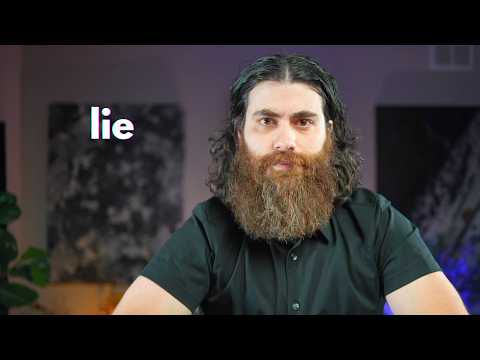
First off, there’s no reason to give into FOMO panic to rush into being an “early adopter” or “innovator” here. You’re not being left behind. If the enterprise GenAI tools really are going to be mass-market adoptions, then you can safely wait to be in the middle. (Note to self: new blog post about how Steve Jobs ruined it for everyone - being an “early adopter” of new tech used to be uncool and dangerous, until he came out with the iPhone and iPad, whose early versions were amazong - and suddenly every fool with money wanted to be an “early adopter” to seem cool.)
 We’re not even at the chasm yet
Second, there’s an art to “surfing the waves of new technology” (paraphrasing my first consulting CEO). I was trained as a consultant. Good consultants experiment with new tech, figure out early what is useful and what isn’t, charge premiums for helping clients adopt the tech, and move on before the tech trend becomes a commodity - they leave those for the “contractors”.
Third, the key skill in any job is to maximize your utility ot the company. Doing things as efficiently as possible isn’t a new thing; it’s always been what has been asked of us.
 Efficiency is Coming
And look, it’s not a bad thing to periodically evaluate your role. What’s critical about what you do? What’s the unique value proposition you bring? And what’s boring “rote” stuff that you can delegate to someone else (human or machine)? It’s the only way we scale. For instance: if you’ve been defining your software development job as “writing code for a living” - welp, bad news. But if you see the job as problem solving, long-term architecting, and good design tradeoffs, then your skills are even more relevant today. For such people, this is actually an optimal learning time! You can be a part of building new design patterns, new practices, and see those decisions play out (or not) in real time. You can learn to keep all options open - exploring at the edges (coding and prototyping faster) while keeping the core lkjh(designing long-term, architecting scalable solutions, solving real problems) secure. It’s a refreshing challenge to an industry that (if we’re honest) had gotten a bit stale.
Let’s look ahead at a few things that are already becoming apparent.
1. Tokens will get more expensive. Mavens like to say “This is the worst AI will ever be.” They forget to mention that “This is the cheapest tokens will ever be.” Before the crash, at least. In their rush to artificially generate demand for GenAI to justify their spending, companies are currently giving away compute tokens at deep, deep discounts. Every single query, every token, is currently costing OpenAI and Anthropic et al lots of money. They’re hoping that you’ll get hooked and start indiscriminately incorporating these workflows into your personal workflows, your enterprise pipelines, and all sorts of critical-path processes, before they have to unleash the real costs upon you. It’s the enshittification playbook all over again. But we can reasonably look ahead and see that this trend can’t continue. The “tough times” of higher per-token cost, of strongly controlled compute, will come soon; and it’ll hurt those who haven’t built the discipline to use them efficiently will have a tough time. Use this to your advantage. Learn on their dime. Test out the technology, trial new workflows, and see what is actually useful and what isn’t - while the going is good. The years of discipline you built up around your profession (software development in my case) aren’t gone - they just need to be applied differently. Your role definition will change, and your day-to-day will change; but for the better in the long run.
2. The true long-term use cases will only emerge after the bubble bursts. At the risk of believing that history repeats itself (rather than just rhymes) - the massive buildout of compute capacity has to find some profitable use somewhere in the long term. OpenAI, Anthropic, and AllBirds (lol) may or may not survive the bust cycle, but most of the hyperscalers will still be around; and will want to sell their now-unused capacity for pennies on the dollar. Jevon’s paradox will kick in eventually; and new use cases, new startups, and new ideas will flourish, built on top of the ash heap of the current hype.
In the meantime - stay useful. If you’re new in your career, try to become a “Category A n00b.” If you have some experience already, try to build a moat of skills/experience that can’t be replicated by machines (yes, this may require you to work harder in the short term to build some skills you may have been neglecting.) If you’re an investor, keep your powder dry. And wait for the turnaround.
Notes:
-
These folks are all rolling back their statements now, in response to PR disasters and tremendous public backlash. Now the story is “it won’t replace humans, it’ll ‘enhance’ them.” But don’t let anyone forget what these CEOs said in their unguarded moments. ↩
-
Everyone needs to go read the Stochastic Parrots paper by Timnit Gebru, Emily Bender et al. This is the famous 2021 paper where Dr. Gebru and Dr. Bender laid out the dangers of LLMs - and which led directly to their firing by Google’s AI el jefe Jeff Dean. Their predictions were eerily accurate in retrospect. ↩
-
Speaking of failing car companies: can we agree that Elon is, without a doubt, the world’s greatest CEO? That is if you consider a CEO’s job as “increasing shareholder value” and nothing else. He has managed to dissociate his company’s stock from ordinary performance concerns like making car, turning a profit, passenger safety, and other such banalities. It’s the world’s first stock powered by CEO’s memes alone. How energy-efficient is that?!! /s Honestly though - Tesla’s EPS for 2025 was $1.08, giving it a forward P/E ratio of nearly 200. In comparison, Toyota, the world’s largest car company, had an EPS of $24 and a P/E ratio of 11. If Tesla fell to the “low” valuation levels of the world’s largest carmaker, they’d lose 95-98% of their current valuation. That would still put Elon’s net worth in the billions. Go figure. Not bad for an alleged illegal immigrant. ↩
-
Writing about GenAI forces you to bring up some of the worst people ever, like Andreesen. I apologize. ↩
-
Apologies to my audience for referencing Uncle Bob - yes, I know. See point 4 above. ↩
-
And don’t think they’ll share the benefits with you line-level minions, btw. Go find an onion if you want profit sharing and other good things for everyone. ↩
-
Perhaps one of the things giving people like Sam and Dario a feeling of security is the history of the subprime scandal. None of the major miscreants were ever punished criminally, let alone faced any financial consequences. The government stepped in and bailed them out, at the cost of the common man. Beyond a certain level of success and money, you don’t fail anymore - you just keep failing upwards. Even if the wider economy crashes and millions of people are hurt, they’ll be fine. ↩